-
Unpacking the original groups that became Zulu, Sotho and Xhosa and other groups
To get specific, the “Zulu” we know today was not a single tribe in 1800. It was a tiny, relatively insignificant clan of about 1,500 people. The modern Zulu nation is a confederacy of hundreds of independent tribes and clans that were merged through diplomacy, marriage, or conquest during the 19th century. Here are the specific groupings that formed the core of the Zulu Empire: 1. The Dominant “Power” Tribes (Pre-1816) Before Shaka took over, these were the large kingdoms that ruled over the smaller clans (including the original Zulu clan). Mthethwa (The Mentors): Led by King Dingiswayo kaJobe. Shaka served as a commander in their army before taking the Zulu throne. They were the first…
-
The wars and outbreaks from the 1800s in Southern (South Akabolane)
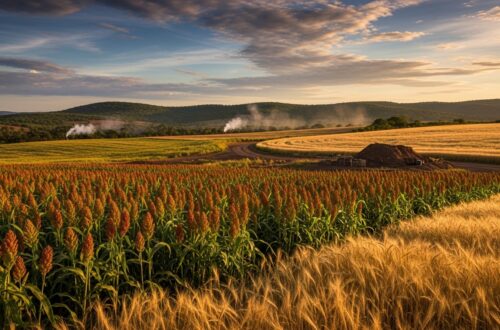
The 1886 Witwatersrand Gold Rush prompted a massive influx of foreign workers (“Uitlanders”), creating severe political tension that led directly to major conflicts, including the Second Anglo-Boer War (1899–1902) and the First Anglo-Boer War (1880–1881). Other significant outbreaks directly or indirectly linked to the economic and social upheaval of the mineral revolution included the 1895 Jameson Raid, the 1906 Bambatha Rebellion, and the 1922 Rand Rebellion. These conflicts were driven by British efforts to control gold resources, disputes over voting rights for foreigners, and intense competition for labour. In 1800, South Africa was in a state of intense transition and conflict, primarily driven by the First British Occupation of the Cape…
-
Ethnic groups of the Southern (South Akabolane)
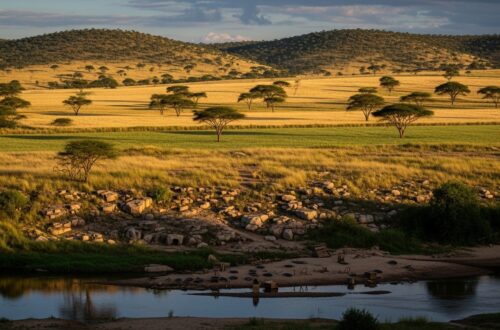
Let’s paint a picture in your mother mind to assist in remembering who you are. The land is modern-day South Africa, our timeline is the mid 1800s (Pre and post) due to the world-famous Gold Rush. Who are the groups that are present at the time in this land? We want to list them here so we can have a clue of where our part was and who our people are as modern-day people in the great work project of raising humanity. Bantu and non-bantu people all over the world have their native land to mind. Due to the movement of reality into the colonial, patriarchal rule, people were forced…
-
The Cosmic Order of Kemet Deities. Duality, Balance, and Immortality
The pantheon of Kemetian Deities. Let us look within to see about the maintenance of Ma’at—the fundamental principle of truth, balance, order, harmony, and justice. These are the gods and goddesses, also known as neteru, represent principles of cosmic order, nature, life, and human consciousness and the human body. They appear in distinct forms across cities, dynasties, and priesthoods all over Ancient Hikuptah. Primordial and Creator Deities Nun (Nu) – Watery abyss; the unformed, chaotic state before creation. Naunet – Feminine aspect of Nun. Atum – First self-created god from Nun. Brings forth creation by generating Shu and Tefnut. Ptah – Creator god of Memphis; brings creation into existence through thought and word. Khnum –…
-
From an internal “Christ consciousness” to the external, “lord and savior” Jesus.
Muntu, let’s try to answer this burning question: how exactly was the Christ consciousness turned into an external Lord and Saviour of the now christianised population of the earth? The transition from an internal spiritual realisation that is a privilege for everyone on earth, or “Christ consciousness,” to an externalised, gate-kept, historical figure of a saviour didn’t just happen overnight, nor outside of the taking over of native lands all over the earth. This was systematic. The concept of the Christ consciousness is influenced by ancient mythologies from the indigenous abantu of the earth, and became the main spiritual attacking of the people, through socio-political factors during the formation of…
-
Freemasonry playing a surprisingly central role in the colonial project
Imagine a web spun across centuries and continents. A web of shared ideology, common purpose, and influential connections. This is the story of how power, far from being just about armies and laws, has been shaped and maintained through networks, with Freemasonry playing a surprisingly central role in the colonial project, from Europe to the tip of Africa. Let’s get into it. The European Roots: A Network is Born This history begins not in the dusty plains of South Africa, but in the bustling cities of 17th and 18th-century Europe. Here, guilds of abantu stonemasons, responsible for building the continent’s cathedrals and castles, began to evolve. They would be identified…
-
What is a Republic?
Our countries nowadays are called republics; there are many other terms and concepts that are tied to that, but today, let us look into republics. At its root, the word “republic” comes from the Latin res publica — meaning “the public thing” or “the common affair.” Core Idea A republic is a form of government where: How it is supposed to be different from other concepts; Although this may end up just being a back and forth, as some of these definitions are getting similarly close to what is called the Common Law of the land, which in its essence ranks higher than any law…simply because it deals with the…
-
Unam Sanctam: One Authority Over All? What It Means for Us Today
In 1302, Pope Boniface VIII issued one of the boldest declarations in Church history: the papal bull Unam Sanctam. At first glance, it reads like a heavy medieval text, but at its core, it speaks to something we still wrestle with today: who really has authority over the lives of the nations, the land and resources? What the Bull Said Boniface VIII declared: In short, Unam Sanctam made the Pope the ultimate authority on Earth — above kings, governments, and citizens alike. What It Meant in Daily Life (1300s) and ultimately beyond Europe. For native people in medieval Europe, as it is today, this was not abstract theology. It touched…
-
Muntu, how do history and law go together?
Ma’at – Umthethokazi – examining the cosmic balance as it relates to the laws and the history of our current reality. Through the teachings of our great ancestors, we are remembering. As taught to me by the Grand Sheikh Taj Tarik Bey, as he was taught by his teacher, Prophet Noble Drew Ali, who founded the Moorish Science Temple of America, on why claiming back our authority over the land through common law and raising the matriarchy to take back her seat as the land herself is crucial for abantu all over the world. Let’s get into it. I will share what I can; it is up to the Bantu…
-
Aligning with the Celestial Rhythm of the moon
For thousands of years, our ancestors looked up at the night sky not for romance, but for guidance. The Moon was not a cold rock in the sky, it was the pulse of nature itself. It whispered to the oceans, stirred the sap in the trees, timed the planting of seeds, and measured the flow of blood in women’s bodies. In the villages, elders would say: “The Moon is the drumbeat of the Earth.” Let’s dive deep into what this celestial body represents. Somewhere between modern lights and busy schedules, we lost the rhythm. But the Moon never stopped dancing. And when you learn to move with her, she can…